
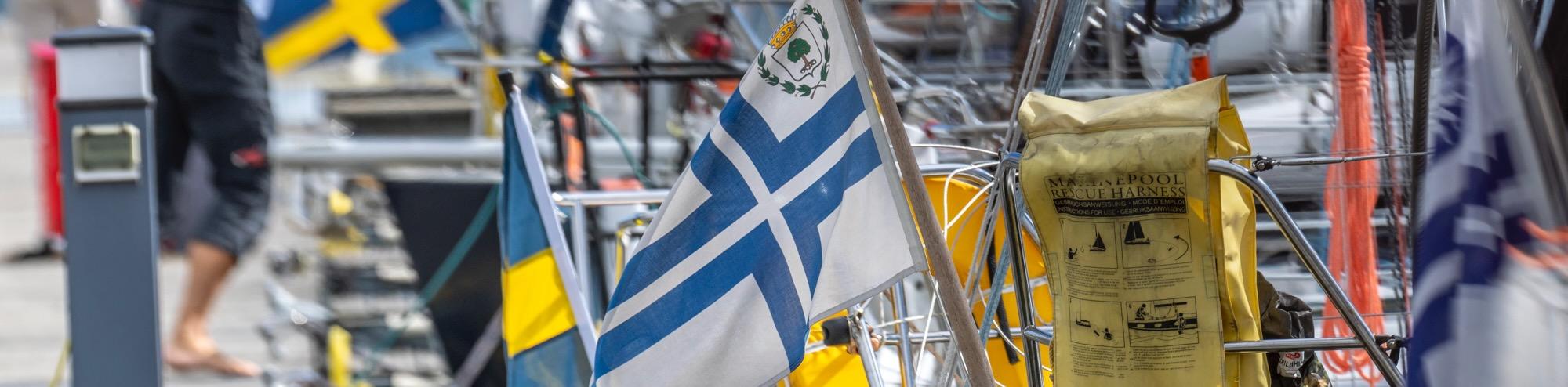
The third edition of the RORC Baltic Sea Race, the longest offshore yacht race in the Baltic Sea, gets underway this Saturday. The race village at Katajanokka opens ahead of the start, with the public also invited to get up close to the boats and meet the sailors. This year, the most distant flag in the fleet comes all the way from Australia.
The Royal Ocean Racing Club is one of the world’s leading organisers of international offshore yacht racing. Among the jewels in the RORC calendar are its classic races of more than 600 nautical miles – true tests of offshore racing that include some of the most celebrated events in the sport.
Legendary races such as the RORC Caribbean 600, the Rolex Fastnet Race and the Rolex Middle Sea Race have become established classics of long-distance offshore sailing, alongside the great Christmas tradition of the Rolex Sydney Hobart Yacht Race.
The RORC Baltic Sea Race is aiming to establish its own place among these offshore classics. The only RORC offshore race sailed in the Baltic Sea now returns for its third edition. Held every two years, the race starts and finishes in Helsinki.
600+ nautical miles around the Baltic
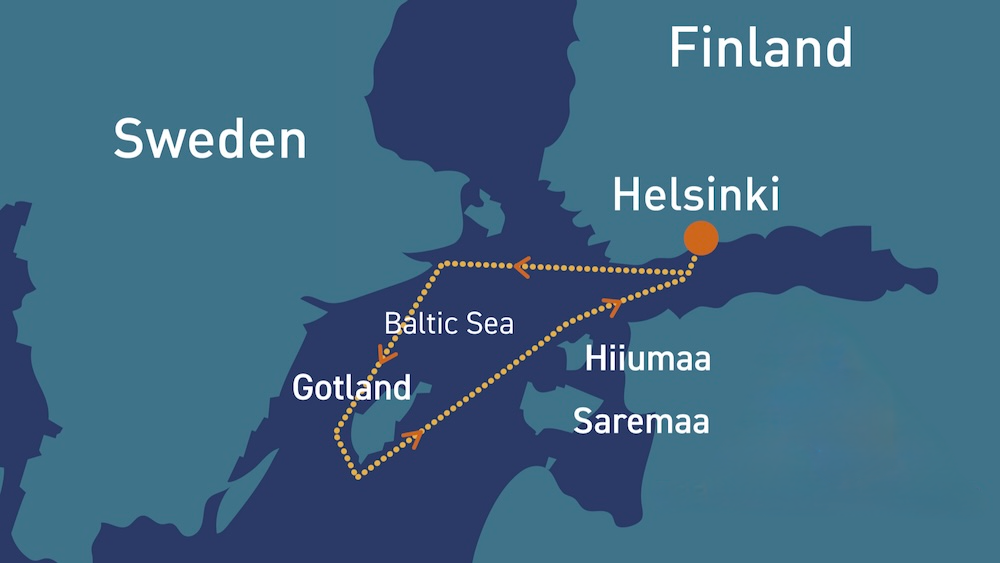
From Helsinki, the course initially takes the fleet west along the northern coast of the Gulf of Finland before passing south of the Åland Islands and into Swedish waters.
The fleet rounds the Almagrundet Lighthouse before turning south, leaving Gotland to port. At the southern tip of Gotland, the Hoburg Lighthouse marks the next major turning point before the boats head east into a true open-sea section of the race.
After racing past the northern coasts of Saaremaa and Hiiumaa, the final turning mark is the Helsinki Kasuuni Lighthouse. From there, the fleet heads north on the final run towards the finish line in Helsinki.
The current outright race record stands at 2 days, 5 hours, 6 minutes and 41 seconds, set during the 2024 edition by the USA-flagged Tschüss 2.
The modified Volvo 70 was owned by Christian Zugel and delivered an impressive performance around the Baltic. The yacht also has a remarkable pedigree: as Groupama 4, she won the 2011–12 Volvo Ocean Race under Franck Cammas.
An international fleet arrives in Helsinki
A total of 24 boats are entered for the 2026 RORC Baltic Sea Race, competing across IRC, FinRating and Multihull divisions.
The home nation is strongly represented with 11 Finnish boats, while an impressive eight entries come from Sweden. Germany has two boats in the fleet, and the most distant entry is the Australian-flagged Swan 53 Bedouin, skippered by Linda Goddard, an experienced RORC campaigner.
.jpg)
Another highly experienced offshore competitor is Germany’s Hanno Ziehm with his Marten 49 Moana.
Swedish sailors Louise Edgren and Anders Lundmark also return to the Baltic Sea Race, this time with their new JPK 10.30 Spirit. The relatively new design has already attracted plenty of attention and collected impressive results on the racecourse.
At the other end of the spectrum, one of the fleet’s true old-school classics is also the smallest boat in the race. Sweden’s Pär Lindfors and Nadine Kugel will compete aboard the Albin Nova Team Mobline, proving once again that long-distance offshore racing is not only about the biggest and fastest boats.
Alongside the fully crewed FinRating divisions, the race also includes a dedicated doublehanded category. The Baltic Sea Race counts towards the Finnish Offshore Racing Association’s Musto DH Ranking, adding another dimension to the competition among the two-handed teams.
In the Multihull division, Germany’s Nica, a 57-foot Roger Hill-designed catamaran, will have the racecourse to herself.
Race week at Marina Bay
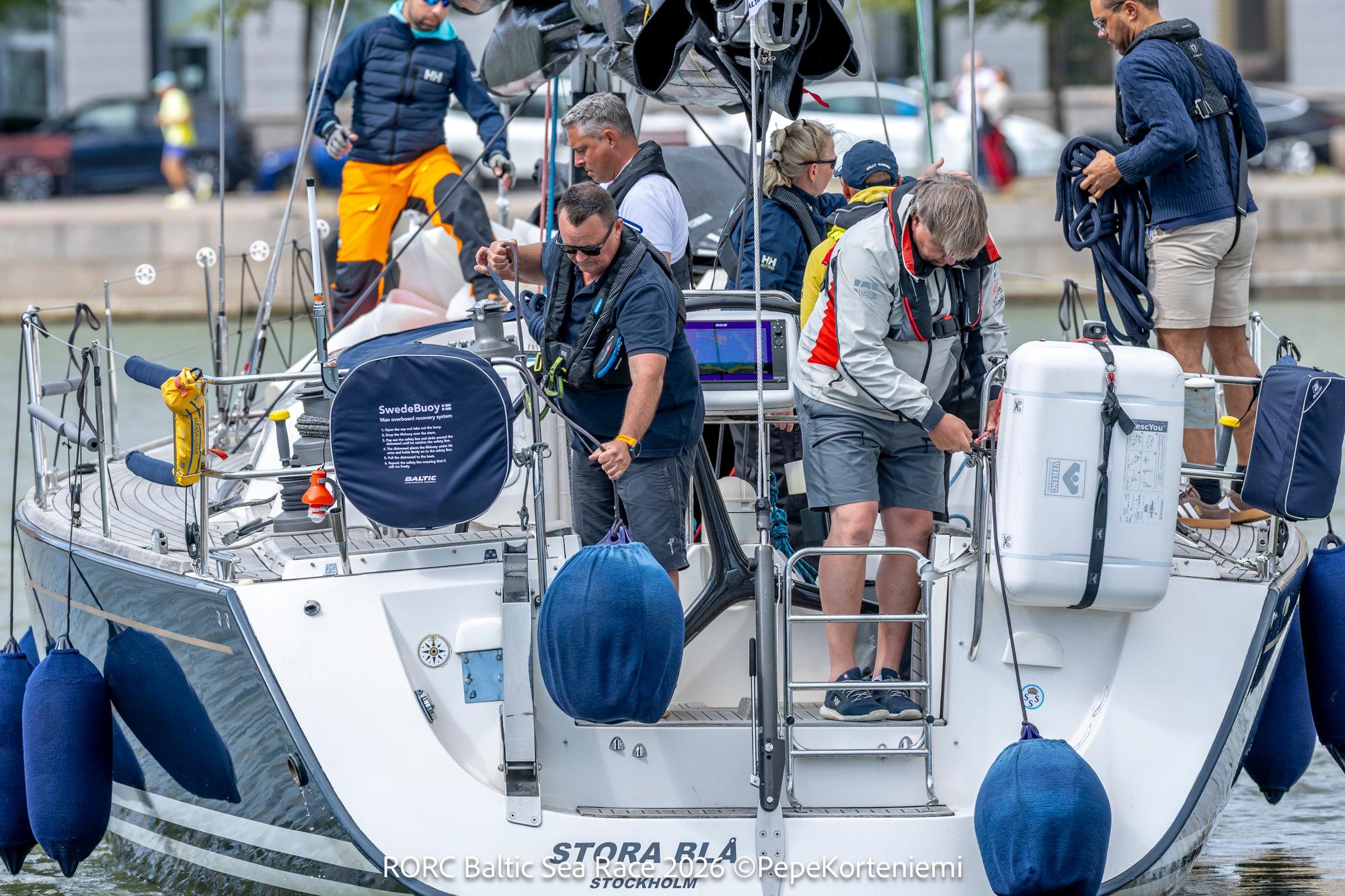
As in previous editions, Marina Bay in Katajanokka provides the home base for the RORC Baltic Sea Race fleet in Helsinki.
The boats arrive in the marina ahead of the start, with the Race Office also opening during race week.
There is plenty of activity around Marina Bay as crews make their final preparations and spend time in the harbour before the race.
The race starts Saturday
The 2026 RORC Baltic Sea Race starts on Saturday 8 August.
While the fastest boats are expected to complete the course in around two to three days, the entire fleet will take longer to return to Helsinki, with racing continuing throughout the week.
The event will conclude with the official Prizegiving on Friday 14 August, celebrating the achievements of the crews after more than 600 nautical miles of offshore racing around the Baltic Sea.
Follow the race live
The RORC Baltic Sea Race can be followed live through the YB Tracking platform, available on both Android and iOS devices.
A link to the tracker can be found on the official race website under the TRACKING section, where a live race map will show the progress and positions of the fleet throughout the race.